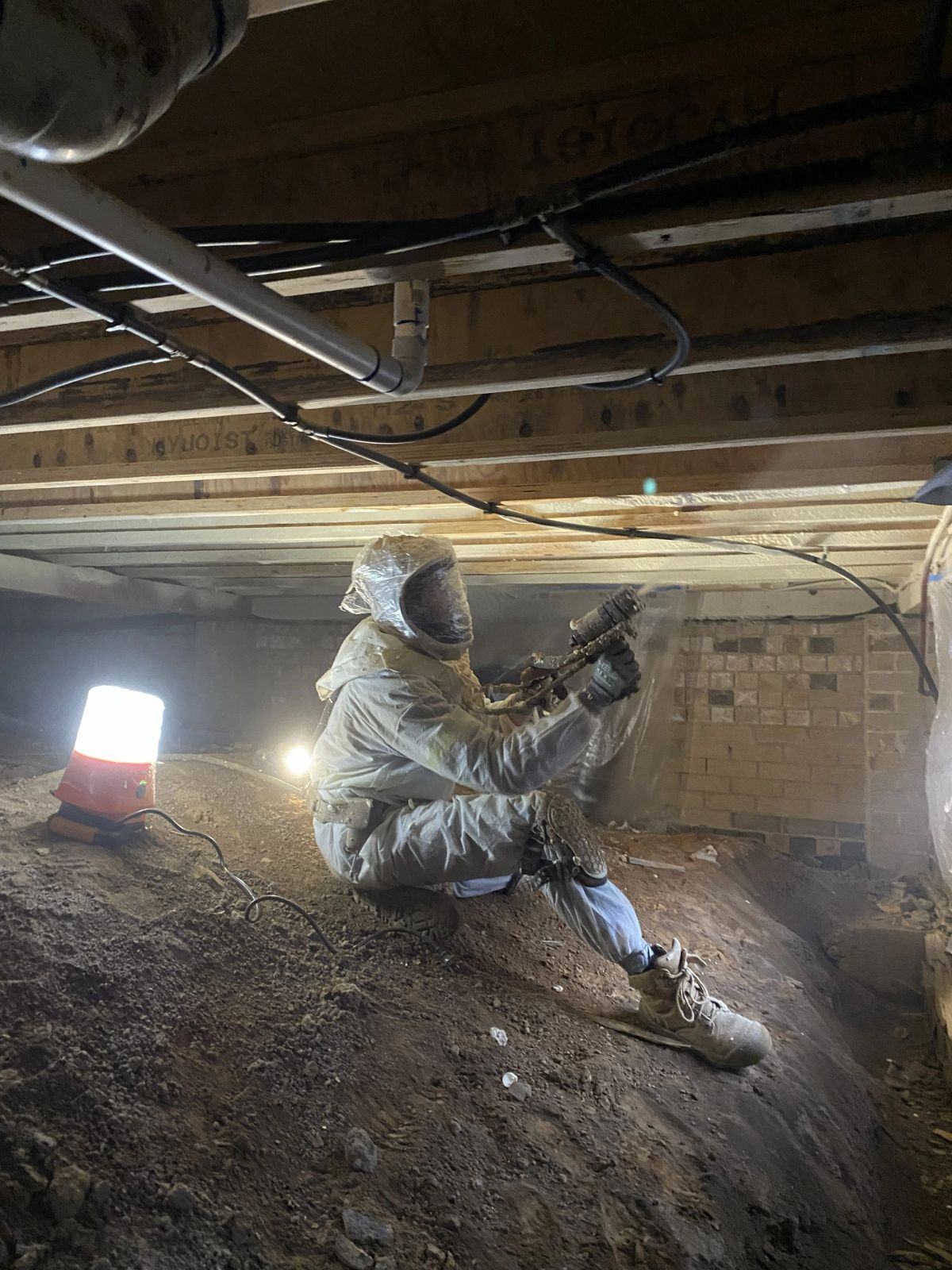
Sheds, Containers & Off Grid
Your shed should not feel like an oven in summer and a fridge in winter.
Across Northern NSW, a lot of people live and work in sheds, workshops, shipping containers, tiny homes and off grid buildings. The problem is the metal. Without proper insulation, these structures trap heat through summer and bleed it through winter, and condensation forms on bare steel. We apply spray foam to create a continuous insulation layer across the surface, helping reduce heat transfer and make the space comfortable and usable year round.
Why this matters to us
Kelly grew up off grid in Bellingen. He knows exactly what it feels like.
This is not a marketing angle for us. Kelly grew up off grid in Bellingen, so he knows firsthand what an uninsulated shed or container feels like at three in the afternoon in the middle of a coastal summer. He has lived it.
The whole point of going off grid is the peace and the space and the quiet. You should be able to enjoy your block without spending half the year hiding from the heat and the other half wrapped in every blanket you own.
That is why we treat off grid and shed builds with the same care as any family home. Because to the people living in them, that is exactly what they are.
Tranquility should be the hard part of off grid living. Not the temperature.
The reality
Why sheds and containers are so brutal without insulation
Metal and thin walls hold almost no thermal resistance on their own. Here is what that actually feels like when you are living in it.
An oven through summer
A metal shed or shipping container in the full Northern NSW sun traps heat until the space becomes genuinely unusable through the middle of the day.
A fridge through winter
The same structure that bakes in summer offers almost nothing against a cold winter night, when the heat you generate just leaks straight out through the walls and roof.
Condensation on bare metal
As temperatures shift, steel walls and roofs sweat. The condensation drips, rusts and damages linings, tools and belongings stored inside.
Workspaces you cannot use
Workshops and workspaces that are too hot for half the year and too cold for the other half end up sitting empty instead of being used.
Got a shed, container or off grid build in mind?
Tell us where you are and what you need, and we will let you know whether the job and location are suitable.
What we seal
Built for the way people actually live up here
Shipping container homes
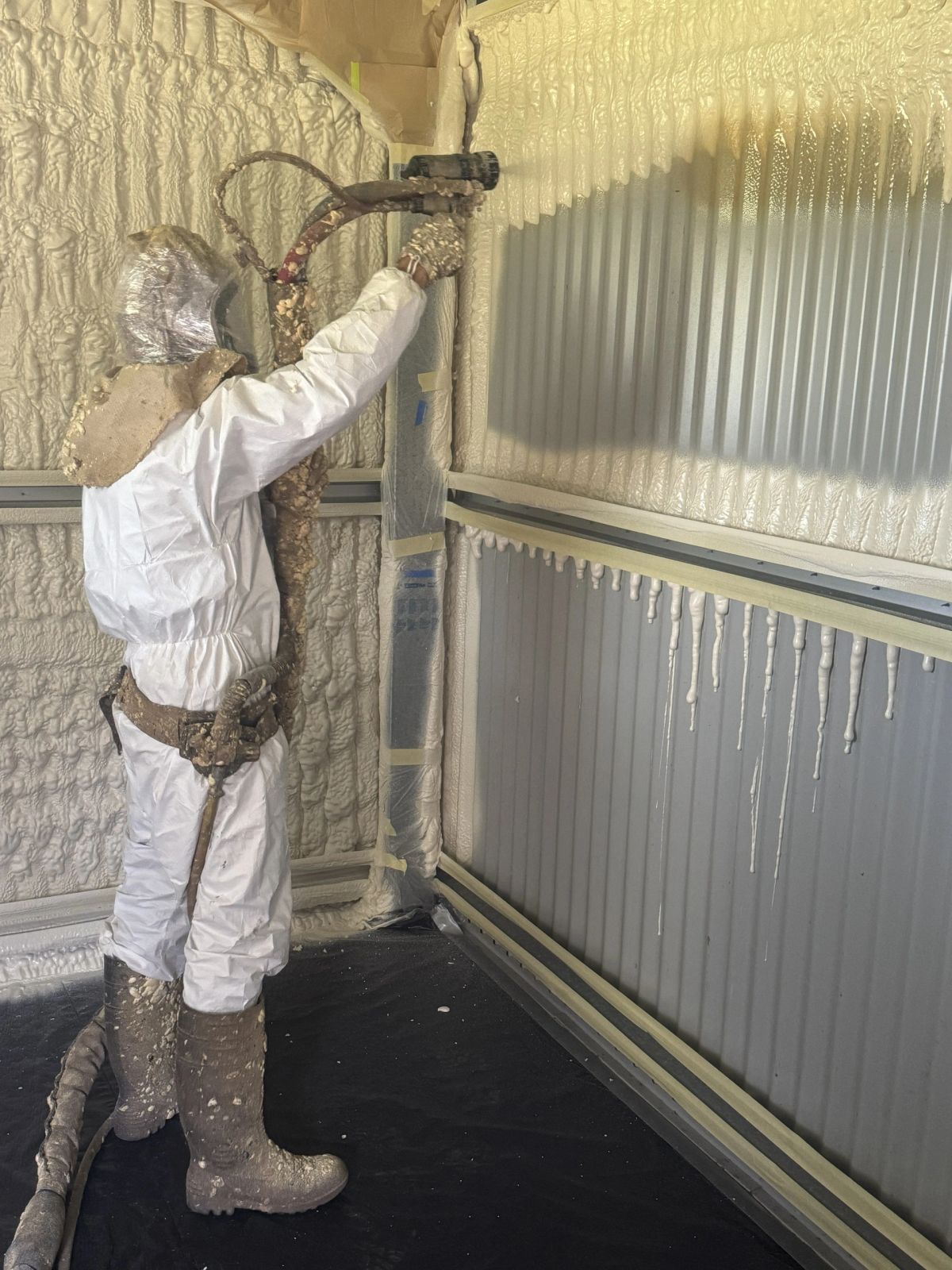
Closed cell foam bonds directly to the steel walls, insulating and sealing in one continuous layer. No gaps around the corrugations, no sagging, no falling out over time.
Shed homes and workshops
Spray foam on the roof and walls turns a shed you cannot stand in at midday into a space you can actually live and work in, all year round.
Tiny homes and off grid cabins
Off grid cabins and tiny homes benefit enormously from a properly sealed envelope, holding the temperature you want instead of bleeding it to the outside.
Solar and off grid systems
When you generate your own power, every degree of heating and cooling counts. A sealed envelope means your system is not working overtime to fight air leakage.
Why closed cell
The right foam for metal and off grid structures
For sheds, containers and off grid builds we use closed cell spray foam. It is the product that actually suits these structures, rather than trying to make residential batts do a job they were never designed for.
- Adheres directly to metal and timber, bonding strongly to the surface as it cures
- Expands to fill every corrugation, join and gap in one continuous layer
- Acts as its own vapour barrier, helping manage condensation on metal walls
- High R value in a relatively thin application, ideal where space is tight
- Mould resistant with a closed-cell structure that stands up to damp conditions
- Fast, professional application that seals even large sheds and containers efficiently
What changes
The difference once it is sealed
Usable through summer
A shed or container that was unbearable at midday becomes a space you can actually use and sleep in through the hottest part of the year.
Easier on your power system
Less air leakage means your heating and cooling does not work nearly as hard, which matters a great deal when you are running off solar and batteries.
Condensation under control
Metal walls sweat. A sealed vapour barrier helps manage the condensation that otherwise drips and damages linings, tools and belongings.
Quieter inside
Rain on a tin roof and wind on a container wall are loud. A sealed foam layer noticeably dulls the drumming and makes the space feel more solid.
Ready to make your space usable year round?
Tell us about your shed, container, tiny home or off grid build and we will give you honest advice on whether spray foam is the right move.
Is your structure suitable?
If you are living in, building or converting any of these, spray foam is almost certainly worth a conversation:
- Shipping container homes and conversions
- Shed homes and liveable sheds
- Off grid cabins and tiny homes
- Workshops and machinery sheds
- Bush block dwellings
- Solar and battery powered setups
Not sure if your build fits? Tell us what you have got and we will give you honest advice on whether spray foam is the right move, with no pressure.
Local and available
Off grid locals do not have to wait for a Sydney crew.
We are based in Bellingen and work across Northern NSW. When a Sydney provider would not come out this far, that is exactly the gap we fill. Smaller shed, container and off grid jobs have a more limited practical service radius, so we do not travel everywhere for every job. Tell us where you are and what you need, and we will let you know whether the job and location are suitable.
Or call Kelly directly on 0494 329 837