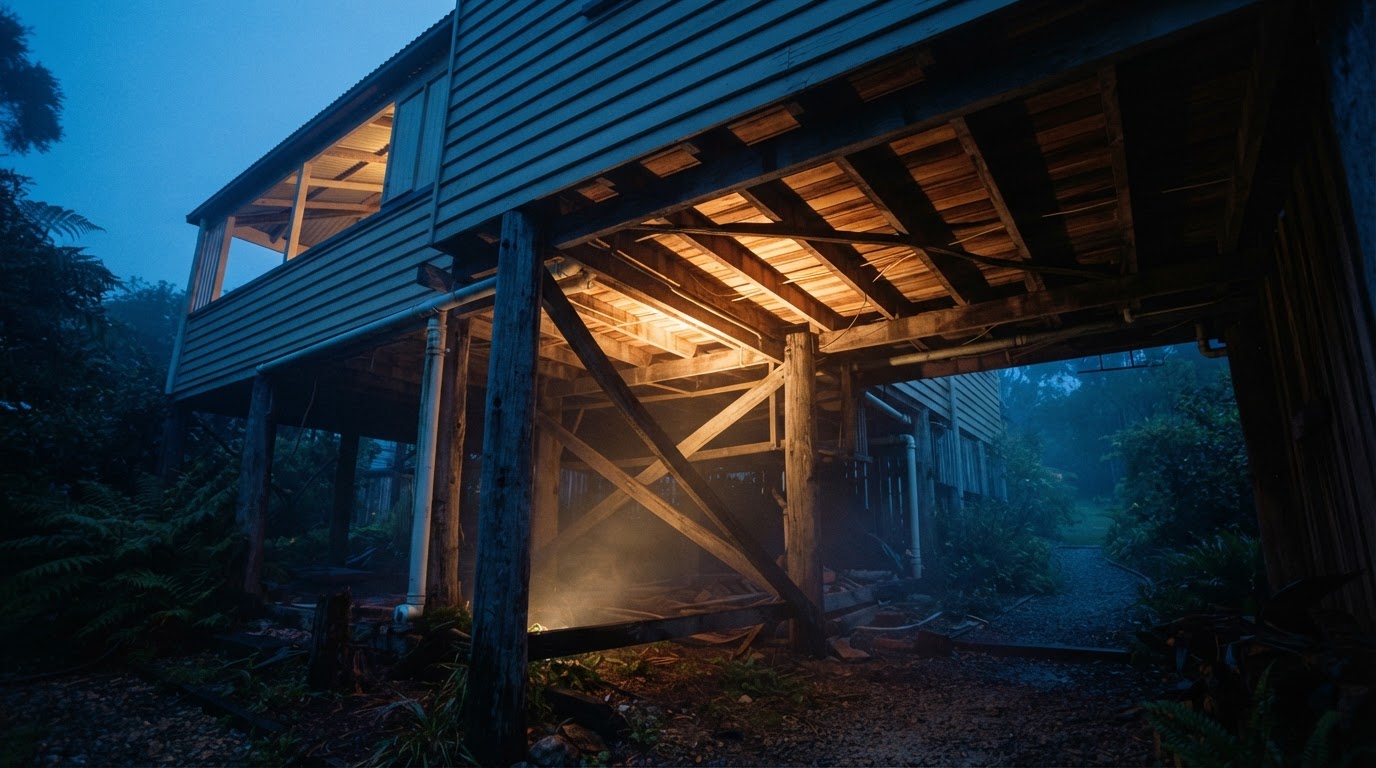
There is a lot of off grid living across Northern NSW. Shipping container homes, shed conversions, bush block cabins. They are a brilliant way to live close to the land and keep things simple. But there is a catch, and anyone who has spent a summer in one already knows what it is.
A steel box in the full sun is an oven by the middle of the day. The same structure that bakes in summer offers almost nothing against a cold winter night. The tranquility is the dream. The temperature is the reality.
Why batts struggle in metal structures
Residential batts are designed for timber framing at standard spacings. Containers and sheds have corrugations, curves, joins and unusual framing that batts simply were not designed to fit. The result is gaps, and in a metal structure, gaps mean condensation, draughts and air moving straight through.
Metal walls also sweat. When warm moist air meets a cold steel surface, condensation forms and drips. Over time that damages linings, tools and belongings. Batt insulation does nothing to manage that.
Why closed cell foam suits these builds
- It bonds directly to steel and timber, so it stays put for decades rather than sagging out of a corrugation.
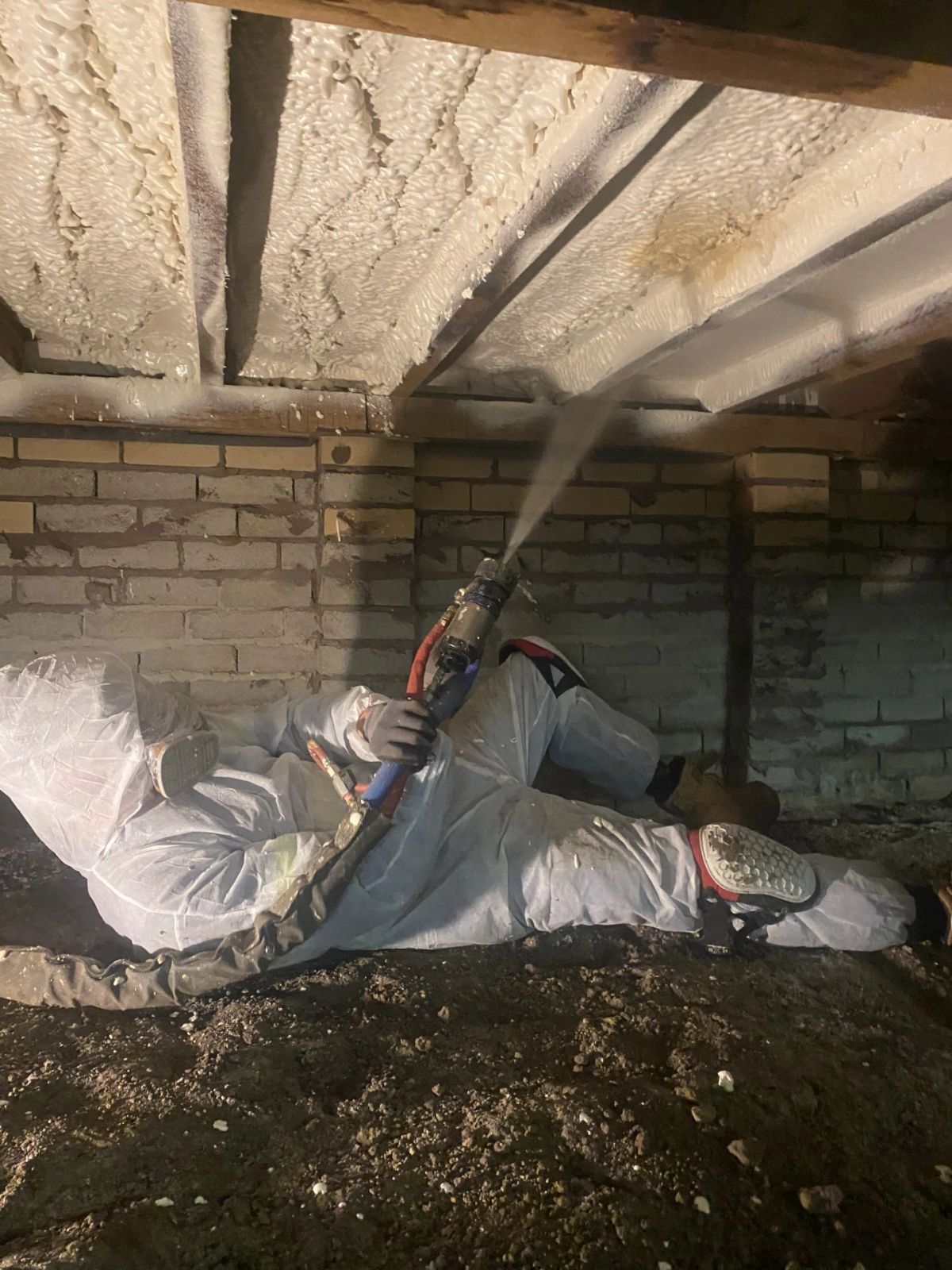
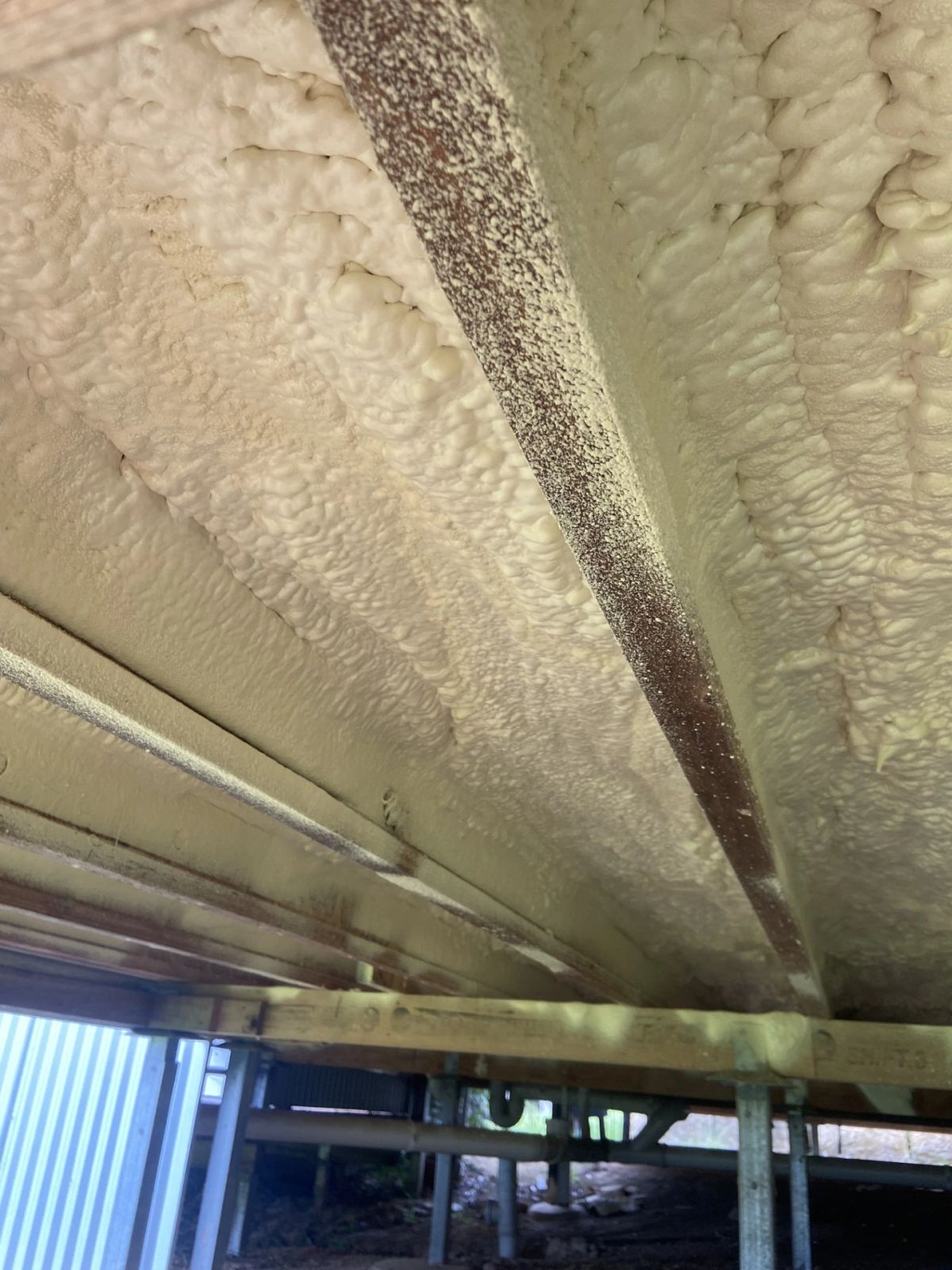
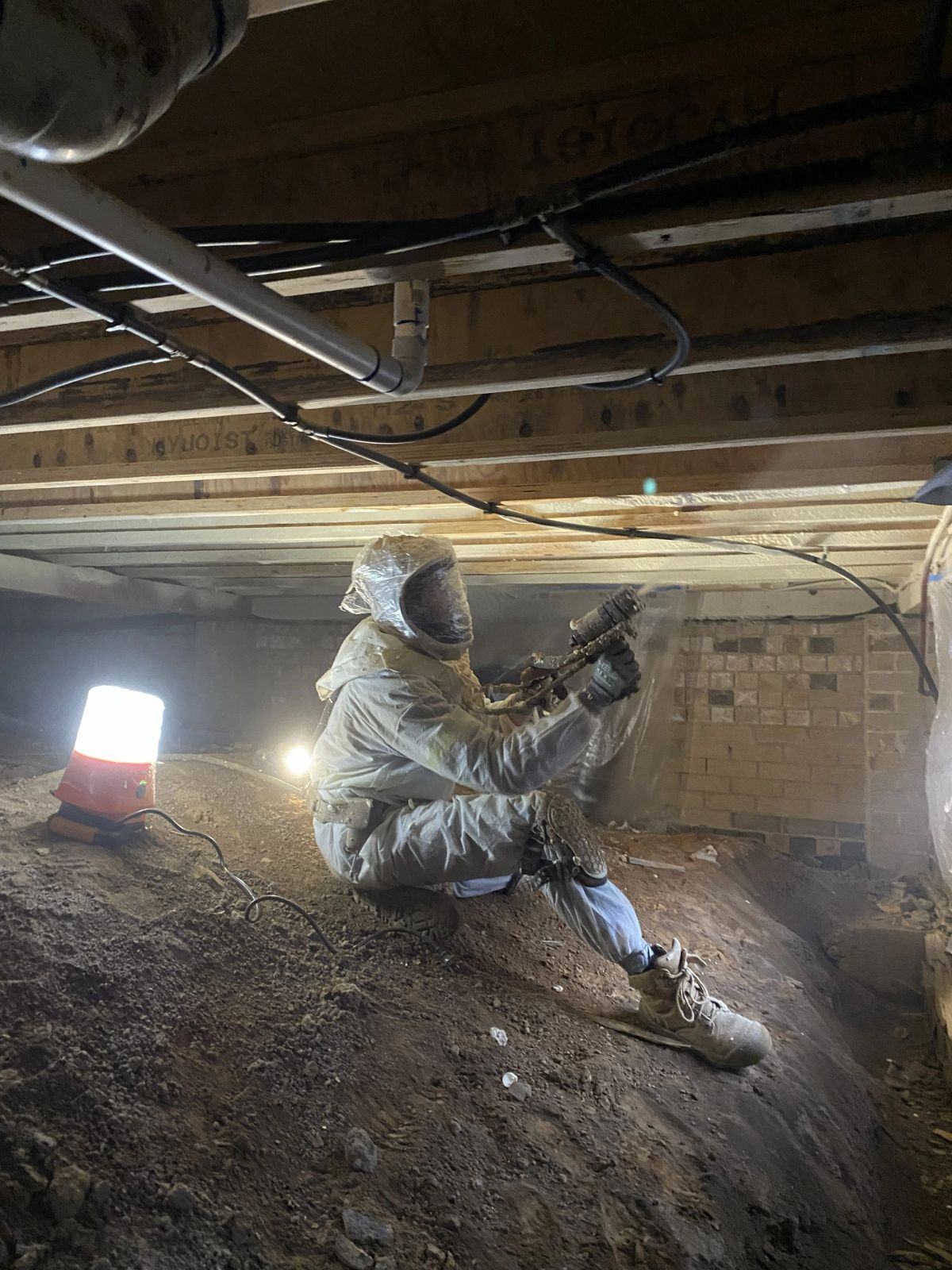
- It expands to fill every corrugation, join and gap in one continuous layer, sealing the structure rather than just lining parts of it.
- Closed cell foam acts as its own vapour barrier, which helps manage the condensation that metal walls produce.
- It delivers a high R value in a relatively thin application, which matters when space is tight inside a container.
- It is mould resistant with a closed-cell structure that stands up to damp conditions.
Easier on your power system
When you generate your own power off solar and batteries, every degree of heating and cooling counts. A well sealed envelope means your system is not working overtime to fight air leakage. Less air leakage, less energy used, more of your power going to the things you actually want to run.
Kelly grew up off grid in Bellingen, so this is not a marketing angle for us. He knows firsthand what an uninsulated shed feels like at three in the afternoon in the middle of a coastal summer. We treat off grid and shed builds with the same care as any family home, because to the people living in them, that is exactly what they are.
If you are building or living in a container, shed or off grid cabin, tell us what you have got and we will give you honest advice on whether spray foam is the right move.
Want honest advice for your place?
Tell us about your property and we will help you understand whether spray foam is the right fit, with no pressure and no obligation.